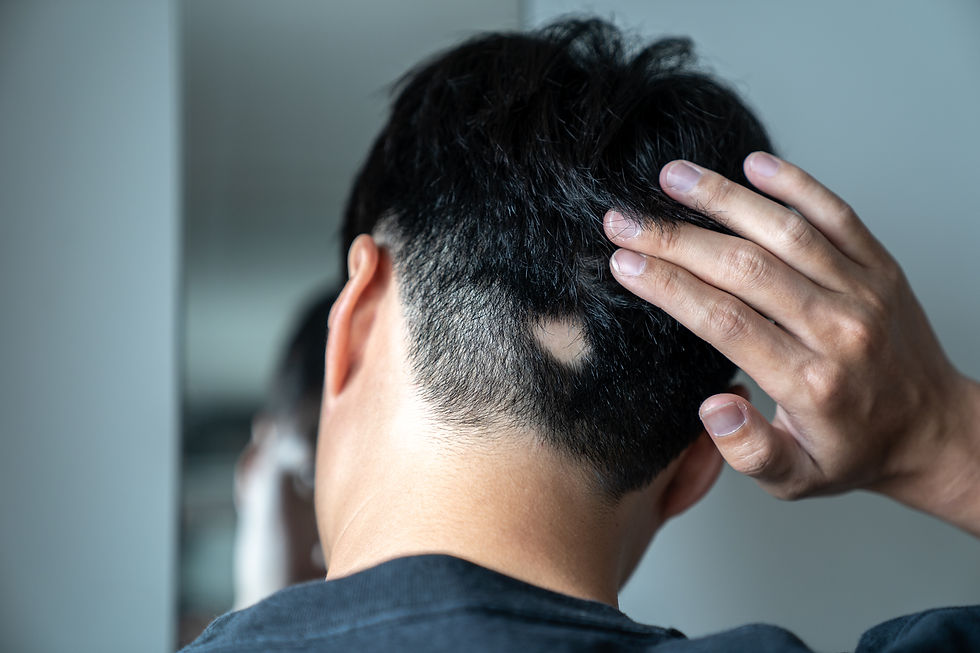
Androgenetic Alopecia
- Sarah Baldwin
- Apr 24, 2022
- 2 min read

What is androgenetic alopecia?
Androgenetic alopecia is the most common type of progressive hair loss. It is also known as male-pattern or female-pattern hair loss. It affects about 50% of men over 50 and about 50% of women over 65. In women, the severity varies; it may present as widespread hair thinning.
What causes androgenetic alopecia? Androgenetic alopecia is caused by a combination of genetic and hormonal factors. Dihydrotestosterone (DHT) is the primary hormone responsible for androgenetic alopecia. DHT causes scalp hair loss by inducing a change in the hair follicles on the scalp. The hairs produced by the affected follicles become progressively smaller in diameter, shorter in length, and lighter in colour until, eventually, the follicles shrink completely and stop producing hair. It is believed that genetic susceptibility to this condition can be inherited from either or both parents. On occasion, there may be no immediate family members with the condition.
What are the symptoms of androgenetic alopecia? Androgenetic alopecia affects men earlier and more commonly than women. Males typically become aware of scalp hair loss or a receding hairline, beginning at any time after puberty. In women, the age of onset is later compared to men, usually occurring in the 50s or 60s. Occasionally, androgenetic alopecia in women may start earlier than this, in the 30s or 40s. It can be associated with an excess of male hormones in some women, such as polycystic ovary syndrome (PCOS).
Can androgenetic alopecia be cured? No, there is no cure for alopecia. However, the progression of this condition in both men and women tends to be slow, spanning several years to decades. An earlier age of onset may predict a quicker rate of progression.
Treatment options include:
Topical minoxidil (Rogaine) – In a solution, foam or ointment that is applied to the scalp once a day. This medication should be used long-term and may initially result in temporary shedding of the hair.
For men, finasteride tablets reduce levels of dihydrotestosterone which may slow hair loss and possibly help regrowth of hair. Continuous use for 3 to 6 months is required before a benefit is usually seen.
In women, spironolactone tablets slow down the production of male hormones and slow down the progression of hair loss caused by androgenic alopecia.
Platelet Rich Plasma (PRP) is a cutting-edge procedure where your blood is drawn in-office, the red blood cells are separated, and the plasma containing platelets and growth factors is injected into the scalp. You should get a series of at least three treatments spaced a month apart.